Non-surgical and minimally invasive hip pain care
Hip pain can stem from tendons, bursae, joints, or referred sources. Dr. Siraj Abdullah in Columbus offers accurate diagnosis and minimally invasive treatment including TenJet® percutaneous tenotomy.
Call Columbus Office What's Causing My Pain?In Their Words
Hear a patient describe chronic tendon pain and the minimally invasive procedure used to treat the damaged tissue.
TenJet Patient Testimonial
Video courtesy of HydroCision, Inc., the maker of TenJet®. Individual results vary; this patient's experience is not a guarantee of outcome. Talk with a specialist about whether the procedure is appropriate for you.
An accurate diagnosis is the first step toward effective treatment. Hip pain can originate from several structures:
When hip pain is caused by tendon degeneration, TenJet® by HydroCision provides a targeted, minimally invasive solution. The procedure removes degenerated tendon tissue with precision, without open surgery.
Learn more: hydrocision.com/product/tenjet/
Dr. Abdullah is board-certified in both Sports Medicine and Family Practice, serving Columbus, Georgia since 2010. He accepts Medicare and most major insurance plans.
Call Dr. Abdullah's office to schedule a consultation and discuss whether TenJet® tenotomy is right for your hip condition.
Call (334) 366-8167Official demonstration video from HydroCision, the maker of TenJet, plus a look at how tendinitis differs from the deeper tissue degeneration TenJet is designed to treat.
TenJet Gluteal Tendinopathy Minimally Invasive Tenotomy


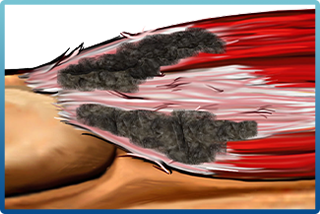
Diagrams and video courtesy of HydroCision, Inc.
Common Questions
Dr. Siraj Abdullah, based in Columbus, Georgia. Evaluation, imaging and the procedure itself are all handled locally rather than requiring a trip to Atlanta.
Not necessarily. Diagnostic ultrasound is often sufficient for tendon assessment and has the practical advantage of being dynamic, though your physician may request an MRI in some cases.
Sedentary work is usually resumed quickly. Work involving prolonged standing, climbing or heavy lifting is reintroduced more gradually as the tendon tolerates load.
As with any procedure that breaks the skin there is a risk of infection, bleeding and incomplete symptom relief. Your physician should review these with you in detail beforehand.
This information is general and is not medical advice. Whether any procedure is appropriate for you can only be determined by a physician who has examined you and reviewed your imaging.